
Deepen Your Knowledge of XR in Europe
Below are the public versions of industry reports and thematic articles authored by XR4Europe
Open Standards, OpenXR, and European Pathways to Global XR Interoperability
This article explores how open standards, with a focus on OpenXR, support interoperability, portability, and long-term sustainability in XR and virtual worlds. It outlines practical pathways for European projects to engage with standardisation processes, situating OpenXR within current EU priorities around digital sovereignty, openness, and global collaboration.
Integrating XR4HUMAN into New Horizon Europe Virtual Worlds Projects
This article explains how XR4HUMAN outputs, including the European XR Code of Conduct and Experience Library, can be practically integrated into Horizon Europe virtual worlds proposals. It offers guidance for coordinators and partners on embedding ethics, human-centred design, and responsible innovation into project design, evaluation, and implementation.
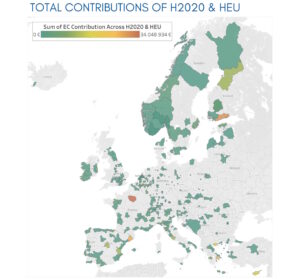
The XR Funding in H2020 & HEU Public Report provides an overview of how extended reality and virtual worlds are supported through EU research and innovation funding. Prepared by XR4Europe using data from the European Commission’s CORDIS database, it shows that Horizon 2020 funded 91 XR-related projects with €336.6 million, while Horizon Europe has already supported 91 projects with €329.1 million and is on track to exceed H2020 funding before 2027.
This publication is the public version of a broader analysis. The full report, including detailed annexes and coordinator lists, is available exclusively to XR4Europe Full, Associate, and Professional members.
The European XR Industry Report 2025 is a significant milestone in XR4Europe’s ongoing mission to provide accurate, actionable insights into the growing XR ecosystem across the continent. This report is a testament to the power of collaboration, made possible through the support and contributions of national XR associations, including INMERSIVA, Eirmersive, and the Portuguese XR Report authors. Together, we have built a unified resource that reflects the vibrancy and diversity of XR innovation in Europe.
Below are reports, repositories, and research by our members, partners, and peers institutions
The European Commission has launched the Virtual Worlds Observatory final reports and Interactive Data Explorer, bringing together new evidence on Europe’s virtual worlds ecosystem, its industrial dynamics, skills needs and global position.
Virtual Worlds, Real Impact: Mapping EU Strengths and Global Interdependencies maps global and EU virtual worlds activity across research, business and innovation. It highlights Europe’s strong research position while identifying gaps in investment, patenting and commercialisation pathways.
Observing Virtual Worlds: Structured assessment of virtual worlds applications reviews 22 real-world use cases across sectors including education, healthcare, manufacturing, defence and entertainment. It examines application development, evaluation, inclusivity, bias, moderation and wider societal impact.
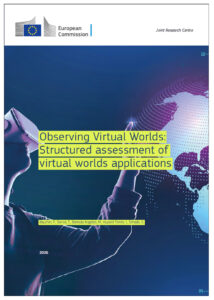
Observing Virtual Worlds: Multi-method Analysis of Skills, Challenges and Emerging Trends examines Europe’s virtual worlds skills landscape through company surveys, education provision and job advertisements. It identifies gaps in XR development, 3D modelling, AI integration and implementation capacity.
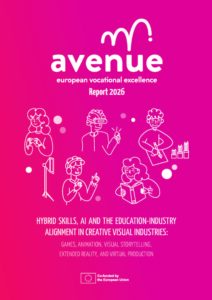
Developed within the Erasmus+ AVENUE project and funded by the European Commission, Hybrid Skills, AI and the Education–Industry Alignment in Creative Visual Industries examines evolving skill needs across Europe’s creative visual industries, including XR, games, and virtual production. Based on literature and industry interviews, it highlights growing demand for hybrid skill profiles that combine technical, creative, and soft skills, alongside the increasing role of AI and real-time tools. It also identifies a gap between education and industry needs in adapting to interdisciplinary workflows. XR4Europe contributed through interviews and by connecting its members to the research process.
The Metaverse Standards Register maintained by the Virtual Dimension Center (VDC) is a publicly accessible overview of standards, specifications, and initiatives relevant to XR, virtual worlds, and the metaverse. It maps existing and emerging standards across areas such as interoperability, hardware, software, networks, content formats, and governance. The registry is designed as a practical reference for industry, research, and policymakers to support orientation, comparability, and informed decision-making. It is continuously updated to reflect the evolving international standardisation landscape.

SURF Tech Trends 2026 is a biannual foresight report supporting education and research institutions in navigating emerging digital technologies. Its Immersive Technologies chapter (slides 26–42) highlights XR’s shift from pilots to operational use, driven by AI convergence, maturing AR and smart glasses, and rising public investment. The report flags generative AI as a catalyst for scalable XR creation, growing platform lock-in risks, and a move toward applied, real-world use cases, with organisational readiness now the main barrier to adoption.
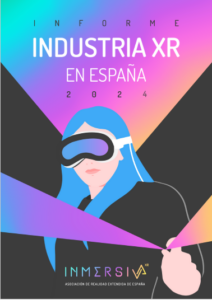
The XR Industry Report in Spain 2025 offers an updated overview of the Spanish Extended Reality (XR) ecosystem, mapping its evolution, maturity, and emerging priorities across sectors such as industry, architecture, healthcare, culture, commerce, and education. Developed by INMERSIVA XR, the report examines market dynamics, talent and skills development, investment trends, and regulatory considerations, while highlighting opportunities for scaling, innovation, and international collaboration. It serves as a key reference for understanding the current state and near-term trajectory of XR in Spain.BI
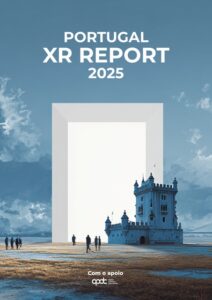
The Portugal XR Report 2025 provides an updated overview of the Portuguese Extended Reality (XR) ecosystem, highlighting its consolidation and growing role as a European hub for immersive technologies such as VR, AR, and MR. Developed by APDC in collaboration with national stakeholders, the report analyses market evolution, talent and skills development, investment and regulatory conditions, and sectoral adoption across education, healthcare, industry, and creative sectors. It outlines Portugal’s strengths in innovation, infrastructure, and international connectivity, while identifying strategic opportunities for growth and cross-border collaboration.
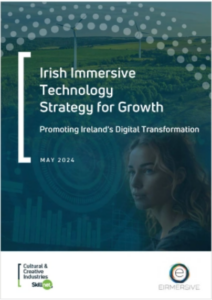
The Irish Immersive Technology Strategy for Growth report explores the opportunities, challenges, and skills landscape shaping the XR sector within Ireland. Developed by the Cultural & Creative Industries Skillnet in collaboration with Eirmersive, the report draws on insights from industry, government, education, and research to present a strategy for fostering innovation and talent development. From sector applications to employment impact, it offers actionable recommendations to drive growth and collaboration in this rapidly evolving industry.
You can access the reports and documentation below using a Google account. Please don’t hesitate to contact us if you’d like to learn more about our research initiatives or support them. We also accept research requests on specific countries or topics.